The Road to a Million Users and Why Fast Growth Fades
Why some apps reach a million users within days, what the famous growth charts really measure and why speed rarely guarantees retention


Key takeaways
Reaching one million users has shrunk from years to days: Netflix needed about three years for its first million subscribers, ChatGPT five days and Threads less than two hours of sign-ups.
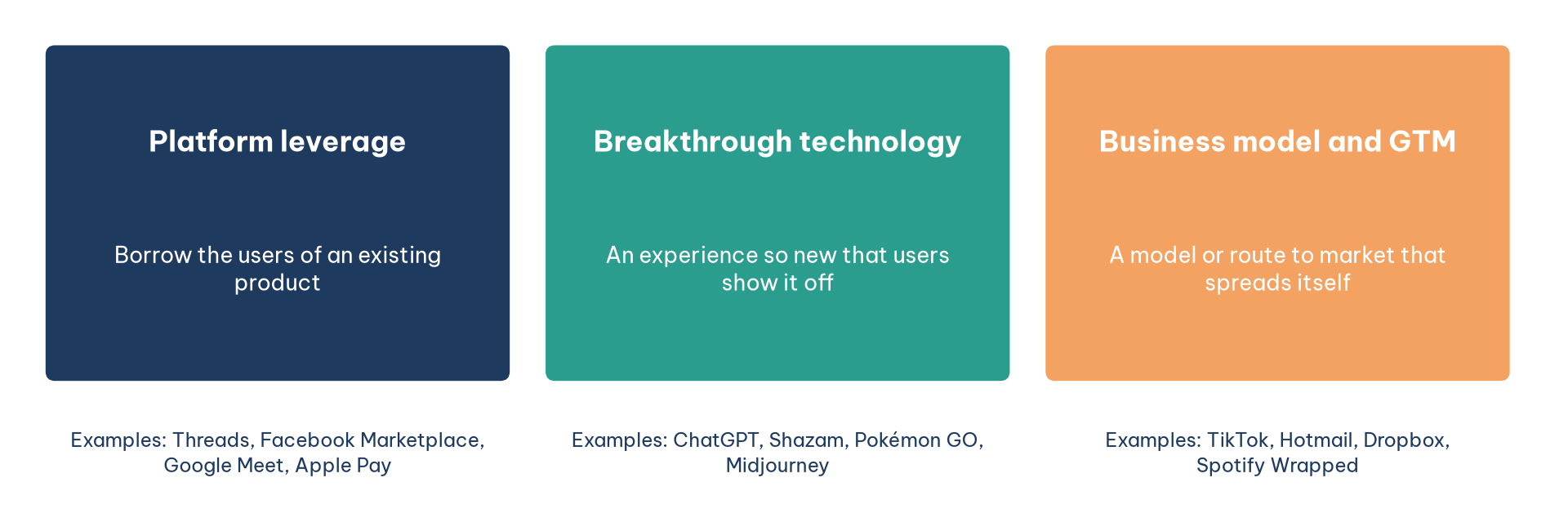
Three levers explain most of the speed: platform leverage (borrowing an existing user base), breakthrough technology (an experience people show off) and a business model or go-to-market that spreads itself.
Free or freemium products grow much faster than products that charge from day one, but each new user is also a weaker commitment.
The popular "race to a million" charts mix sign-ups, downloads, estimated active users, backers, nights booked and paying subscribers. They are not comparable on one axis, and they only show the survivors.
The decisive question is not how fast a product grows but how many people are still there after three months and whether they will pay.
In July 2023, Meta's Threads collected 100 million sign-ups within five days of launch (Paul & Sriram, 2023). Netflix, by contrast, needed about a decade of streaming before it crossed 100 million paid members in 2017 (Netflix, 2017a). Records like this one have shaken old assumptions about how technology products grow, and they invite a basic question: what has changed in the "growth DNA" of digital products, so that a race once measured in years is now measured in days or even hours?
Two charts have become the standard maps of this race: Statista's time to one million users and Visual Capitalist's time to 100 million users (Statista, 2023; Visual Capitalist, 2023). Both circulate widely in classrooms, pitch decks and social media. Yet growth figures, like any figures, need careful reading. The "million users" of Threads, Instagram and Netflix are not the same thing, several numbers that circulate with these charts are hard to trace to any primary source and growing fast is not the same as keeping people.
This article works through six sections. Section 1 rebuilds the two charts using only milestones that can be traced to company announcements or reputable reporting, then looks at nine products and the reasons behind their speed. Section 2 organizes those reasons into three growth levers. Section 3 links speed to go-to-market strategy and revenue model. Section 4 shows how to read the charts correctly, and Section 5 turns to the question that matters more than speed: retention. Section 6 draws lessons for startups and for large incumbents.
1. Two maps of growth
This section places well-known products on a common time scale and then asks what the fastest of them have in common.
1.1. The race to one million and 100 million users
Figure 1 shows the time from launch to the first million users for nine services. It follows the idea of the Statista chart, but every milestone has been checked against a dated announcement or press report, and products whose figures could not be traced were left out. The time axis is logarithmic; on a linear axis Threads and ChatGPT would be invisible slivers.
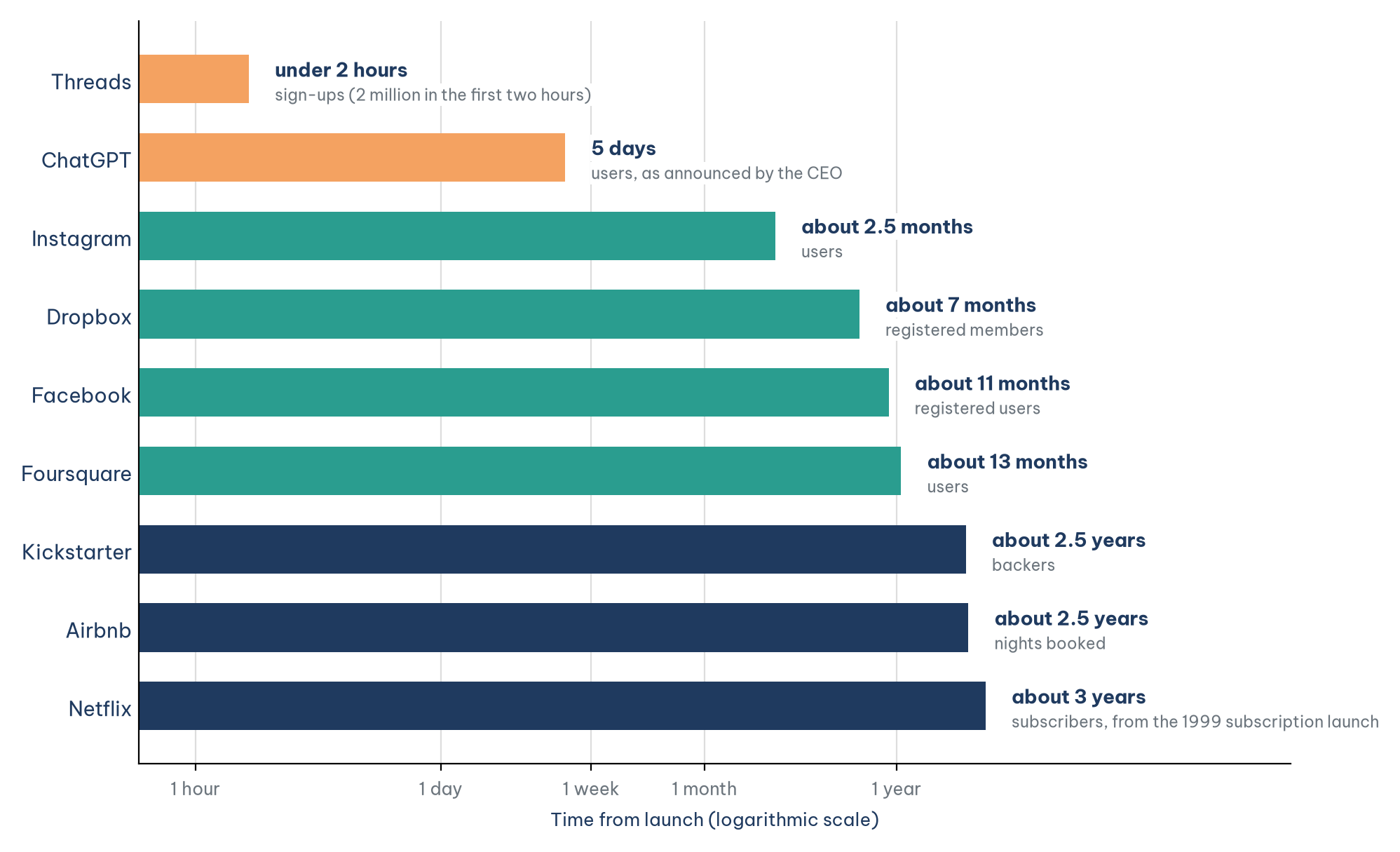
The fastest entries are recent. ChatGPT launched on November 30, 2022, and five days later OpenAI's chief executive announced that it had crossed one million users (Altman, 2022). Threads went further still: on its launch day in July 2023 it passed two million sign-ups in its first two hours (Statista, 2023). Instagram announced its first million users on December 21, 2010, less than three months after its October launch; in the same report TechCrunch noted that Foursquare had needed just over a year and Twitter about two years (Siegler, 2010). Dropbox passed one million members in April 2009, about seven months after its public debut in September 2008 (Kincaid, 2009), and Facebook registered its millionth user on December 30, 2004, some eleven months after launch (Computer History Museum, n.d.).
The slowest entries count something other than users. Kickstarter, which launched in April 2009, reached its millionth backer in October 2011 (Core77, 2011). Airbnb, founded in August 2008, announced one million nights booked in February 2011 (TechCrunch, 2011). Netflix introduced its flat-fee subscription in December 1999 (Netflix, 1999) and passed one million subscribers in February 2003 (Munarriz, 2003), roughly three years later.
Figure 2 moves the finish line to 100 million users.
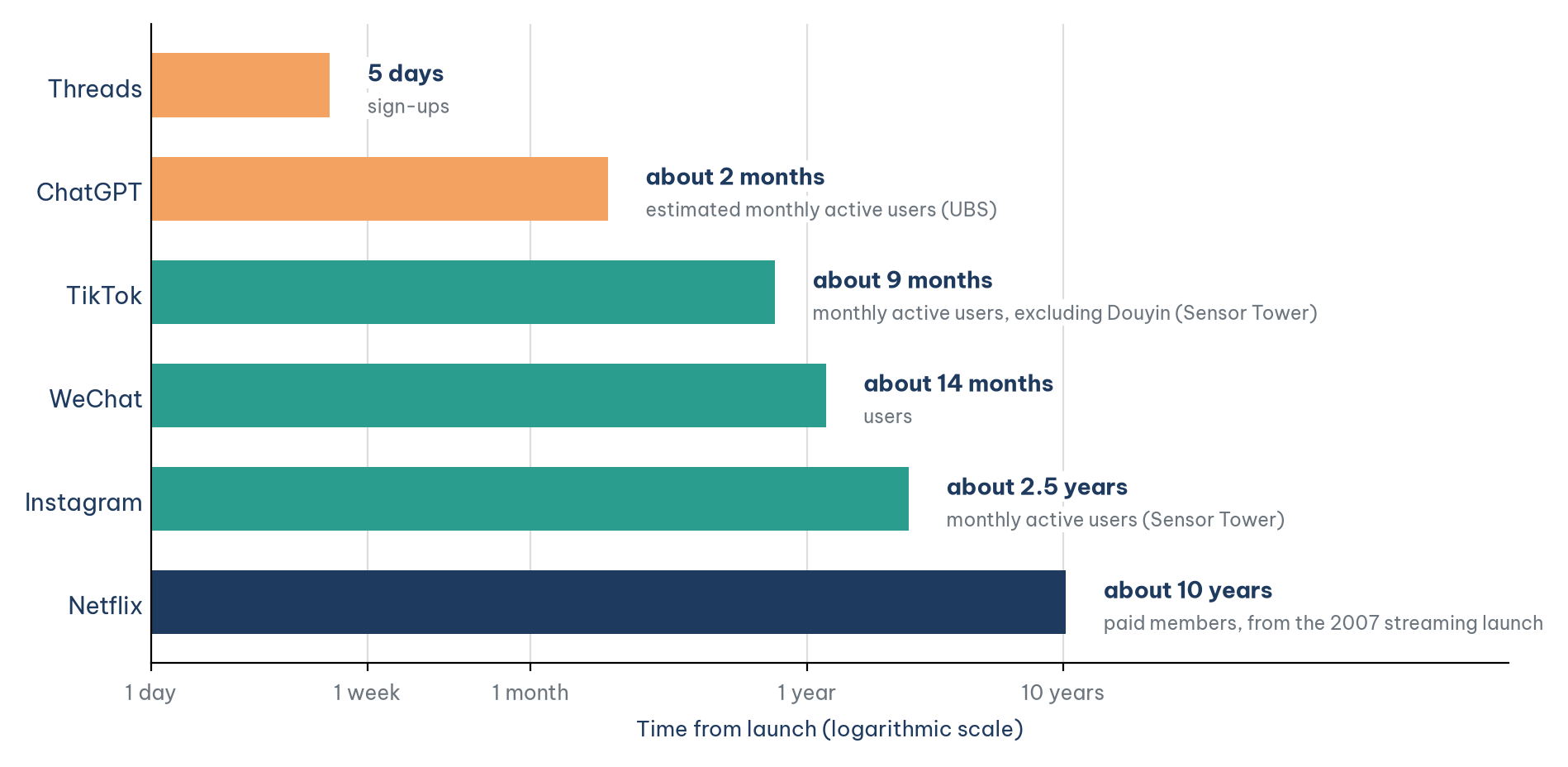
ChatGPT's "two months" is not a company figure but an estimate: the bank UBS, using web traffic data from Similarweb, estimated that ChatGPT reached 100 million monthly active users in January 2023, while Sensor Tower data put TikTok at about nine months and Instagram at about two and a half years (Hu, 2023). WeChat, launched by Tencent in January 2011, reached 100 million users in March 2012 (Chen, 2013). Netflix wrote in April 2017 that it expected to cross 100 million members that weekend and confirmed the milestone in its next quarterly letter (Netflix, 2017a, 2017b).
The small labels under each bar matter as much as the bars: backers, nights booked, sign-ups and paying subscribers are different things. Section 4 returns to this detail.
1.2. Nine champions and their growth DNA
To understand how these products grew so fast, it helps first to look at who they are. Table 1 summarizes nine of them and the reason most often given for their speed.
Read down the last column of Table 1 and a few patterns repeat. The next section groups them.
2. Three growth levers
This section turns the patterns in Table 1 into three strategic levers, shown in Figure 3. A product can rely on one lever or combine several.
2.1. Platform leverage
Platform leverage is the biggest advantage of large technology companies: they use one successful product to seed the next. Threads, launched on top of Instagram, is the textbook case. Other examples follow the same logic:
Apple Pay comes built into iOS on a vast installed base of devices. It removes the installation step and draws on the trust people already place in the Apple brand.
Facebook Marketplace: instead of building a classifieds site from scratch, Facebook placed Marketplace inside its main app, where it had a ready audience of potential buyers and sellers.
Google Meet: when the pandemic struck, Google built Meet into Gmail, which made it a one-click option for millions of individuals and businesses.
Super-apps in Asia, from WeChat in China to the messaging and payment apps of other markets, use the same lever when they add new services such as payments, shopping or government services for an existing base of users.
2.2. Breakthrough technology
The second lever works when a new technology is so novel and useful that it creates its own wave of word of mouth. ChatGPT is the textbook case. Other examples:
Shazam offered a "magic" experience: identifying a song just by listening to it. Every successful use was a small demonstration that encouraged the person nearby to try it.
Pokémon GO (2016) combined augmented reality and location with an intellectual property loved around the world. It was not the first location-based augmented reality game, since Niantic's own Ingress came out in 2012, but catching Pokémon in the real world turned into a mass cultural phenomenon.
DALL-E 2 and Midjourney: generating images from text descriptions set off a large wave of sharing on social media as users showed off their "works".
2.3. A business model and go-to-market that spread themselves
The third lever is growth through a business model or a go-to-market (GTM) strategy that has virality built in. TikTok, whose recommendation algorithm puts every new video in front of strangers, is the textbook case. Other examples:
Hotmail (1996) ran one of the first viral loops: a line inviting the recipient to get free email at Hotmail was added automatically to the end of every message sent, which turned every user into an advertiser.
Dropbox gave extra free storage to both the person who made a referral and the person who joined. Its chief executive said in 2009 that the referral program was driving sign-ups, with growth of roughly 22 to 25% a month since launch, all without heavy advertising spending (Kincaid, 2009).
Spotify Wrapped: at the end of each year, Spotify creates a personalized, well-designed summary of each user's listening habits. Because it is personal and ready to share, it turns millions of users into promoters of the brand.
The three levers explain why a product spreads quickly. But speed also depends on a factor that gets less attention: whether users have to pay right away.
3. The hidden engine: growth, go-to-market and revenue model
This section shows that growth speed comes from the interplay between go-to-market strategy and revenue model.
3.1. How go-to-market strategy has changed
Sales-led growth relies on a sales team to persuade customers one by one, usually businesses. The process is slow and expensive, but each contract is large. Traditional enterprise software such as enterprise resource planning (ERP) systems is the typical example.
Product-led growth (PLG) lets the product itself be the main marketing and sales tool: users try it on their own, see its value and decide to upgrade (Bush, 2019). The freemium model, used by Spotify, Slack and Zoom, is the heart of PLG. It removes friction and lets a product spread naturally before asking anyone to pay. ChatGPT took this model to a new scale.
Netflix is sometimes presented as an example of sales-led growth, but that is a misreading. Netflix sells directly to consumers and has never relied on a sales team persuading customers one at a time. What made Netflix slower was its revenue model, as Section 3.2 explains.
3.2. The revenue model sets the speed
Table 2 compares two groups of revenue models.
The combination. Threads is the clearest example: a low-friction revenue model (free, with advertising to come later) combined with platform leverage (existing Instagram accounts) produced unprecedented speed. At launch Threads carried no advertising at all, and Mark Zuckerberg said Meta would think about monetization only once there was a clear path to a billion users (Paul & Sriram, 2023). Netflix, at the other extreme, needed about ten years of streaming to reach 100 million members partly because every member paid from the first month. But 100 million paying members is a very different achievement from 100 million free sign-ups, and that is the subject of the next section.
4. Reading the charts correctly
This section explains why the charts in Section 1, attractive as they are, place side by side numbers that measure different things. Figure 4 arranges the most common user metrics from the easiest to reach to the hardest.
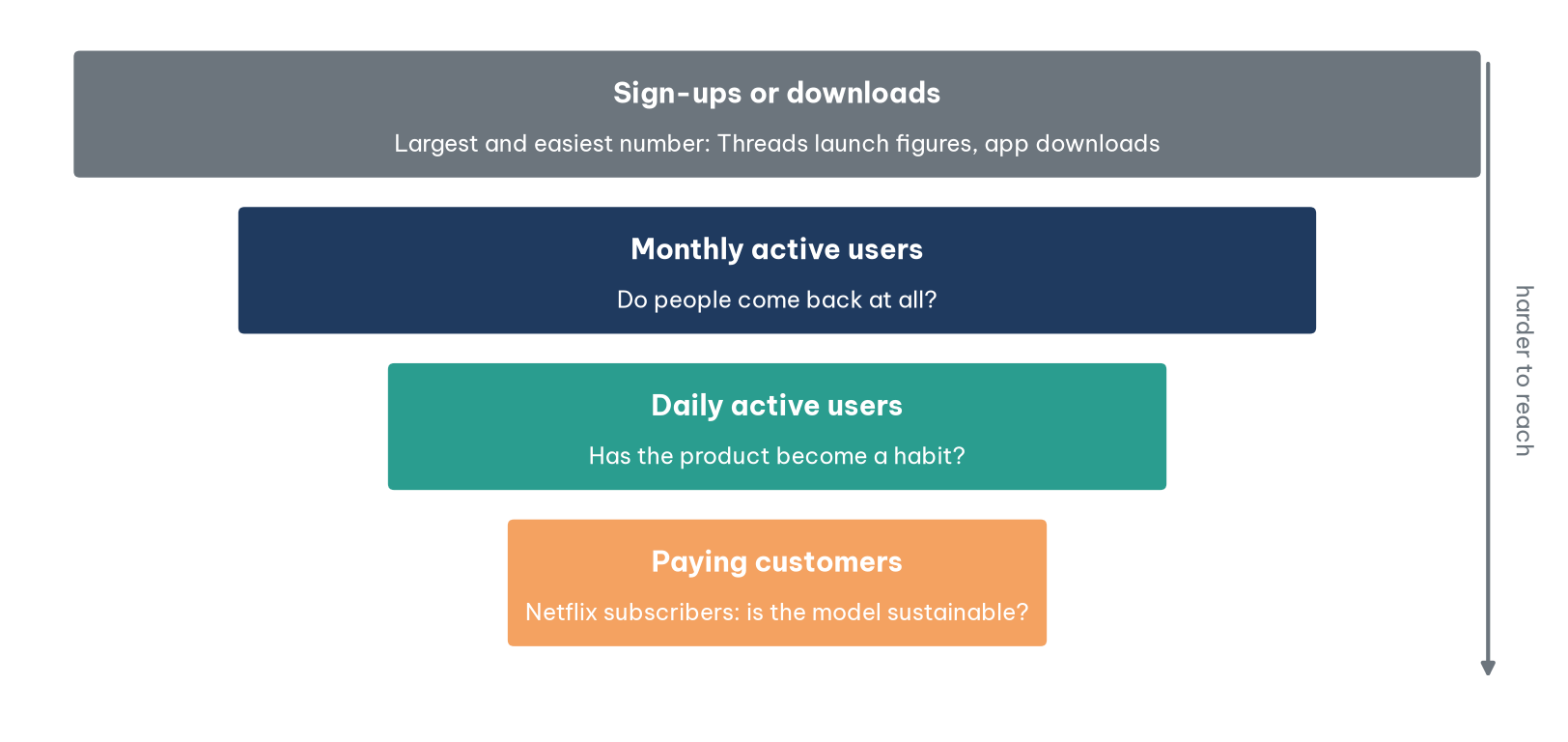
Table 3 shows which metric actually lies behind each milestone in the two charts.
Four cautions apply whenever you read a chart of this kind:
Apples and oranges. A million accounts created with one tap and a million subscribers paying every month cannot be compared directly. Putting Threads and Netflix on the same axis compares two tasks of very different difficulty.
When does the clock start? Launch dates are a choice. Netflix's first million takes about three years if the clock starts at its subscription launch in December 1999, but closer to five years if it starts when the website opened in 1998. Dropbox's seven months are counted from its public debut, not from its private beta. Small choices like these can move a product up or down the ranking.
Survivorship bias. The charts include only products that succeeded. Thousands of products launched with fanfare and then vanished are absent, which makes it easy to believe that "fast growth means success".
A bigger playing field. Far more people used the internet and smartphones in 2023 than in 1999 or 2006. Part of the speed of recent products is simply that the market is larger, not only that the strategy is better.
5. Fast growth does not guarantee retention
This section follows the Threads story past its first week and adds a framework that puts acquisition, retention and monetization in one view.
The Threads record was only the beginning of its story. Within two weeks of launch, data from Sensor Tower reported by the Wall Street Journal showed daily active users down about 70% from their peak on July 7, 2023, to roughly 13 million, while average daily time spent fell from about 19 minutes to about 4 minutes on iOS (Morris, 2023). Meta then added features such as direct messages, custom feeds and links with other platforms, and usage gradually recovered. In August 2025, Threads passed 400 million monthly active users (Malik, 2025). Google+ (2011) is a less happy example. Tied to Google accounts, it gathered a great many sign-ups but little real use, and Google shut down the consumer version on April 2, 2019 (Conway, 2019).
The lesson is that the speed of acquisition is only one part of the picture. Table 4 places it in a three-step framework.
A product that grows fast but cannot keep its users is like pouring water into a leaking bucket. A product that grows slowly but retains users well and has a sustainable way of earning money can create far more value. Comparing customer lifetime value with acquisition cost is the simplest way to tell the two situations apart.
6. New rules for the winners
This final section draws lessons from the analysis above, first for startups and large companies in general, then for startups trying to apply the three levers in practice.
6.1. Lessons for startups and for large companies
The technology world has changed the rules. The race no longer goes simply to whoever has a good idea; it goes to whoever builds and executes the most effective growth levers.
For startups: competing head-on with large companies is increasingly hard, because they hold platform leverage that a startup lacks. The more realistic paths lie in breakthrough technology (a product that is clearly better) or an inventive business model and GTM in a niche that large companies have not reached. Starting from a small but committed community, as Facebook did at Harvard, often works better than trying to spread widely at once.
For large companies: platform leverage is a very strong distribution advantage. They can be late to innovate and still win through distribution. Yet, as Threads and Google+ show, distribution brings users quickly but does not guarantee that they stay.
6.2. Using the three levers as a startup
A startup without its own platform can still pull each lever, but each comes with a catch. Table 5 summarizes the options.
On the second row, general-purpose AI models are available to everyone, so a startup rarely wins on the model itself. It wins by understanding a market that global products serve poorly, such as a language with little training data or local rules that a generic assistant gets wrong.
Conclusion
The Threads record will be broken one day. But the principles behind it, the power of a platform, the "magic" of a breakthrough technology and the cleverness of a well-designed go-to-market, will keep explaining why some products spread faster than others.
Just as important is reading growth figures with a cool head. A million sign-ups, a million active users and a million paying subscribers are three very different achievements, and several of the numbers that travel with the famous charts are estimates or cannot be traced at all. The question that decides whether a product succeeds is usually not "how fast does it grow?" but "how many people are still here after three months, and are they willing to pay?". Speed gets a product noticed; retention and real value keep it alive.
References
Altman, S. [@sama]. (2022, December 5). ChatGPT launched on wednesday. today it crossed 1 million users! [Post]. X. https://x.com/sama/status/1599668808285028353
Bush, W. (2019). Product-led growth: How to build a product that sells itself. Product-Led Institute. https://productled.com/book/
Chen, K. (2013, January 17). 2 years, 300 million users for Tencent's WeChat. The Motley Fool. https://www.fool.com/investing/international/2013/01/17/tencents-wechat-300-million-users-in-less-than-2-y.aspx
Computer History Museum. (n.d.). This day in history: December 30. Retrieved November 18, 2026, from https://www.computerhistory.org/tdih/december/30/
Conway, D. (2019, January 30). What you need to know about the sunset of consumer Google+ on April 2. Google Workspace Blog. https://workspace.google.com/blog/product-announcements/what-you-need-to-know-about-the-sunset-of-consumer-google-plus-on-april-second
Core77. (2011, October 11). Kickstarter hits a million. https://www.core77.com/posts/20768/Kickstarter-Hits-a-Million
Hu, K. (2023, February 2). ChatGPT sets record for fastest-growing user base: Analyst note. Reuters. https://www.reuters.com/technology/chatgpt-sets-record-fastest-growing-user-base-analyst-note-2023-02-01/
Kincaid, J. (2009, April 24). Dropbox: Now effortlessly syncing files for 1 million members. TechCrunch. https://techcrunch.com/2009/04/24/dropbox-now-effortlessly-syncing-files-for-1-million-members/
Malik, A. (2025, August 12). Threads now has more than 400 million monthly active users. TechCrunch. https://techcrunch.com/2025/08/12/threads-now-has-more-than-400-million-monthly-active-users/
Morris, C. (2023, July 21). Mark Zuckerberg's Threads traffic is now down 70% from its peak, just 2 weeks ago. Fortune. https://fortune.com/2023/07/21/threads-traffic-down-70-percent-two-weeks-meta-musk-zuckerberg/
Munarriz, R. (2003, February 28). Netflix's million man march. The Motley Fool. https://www.fool.com/news/take/2003/02/28/netflixs-million-man-march-mft03022801.aspx
Netflix. (1999, December 16). Netflix.com transforms DVD business eliminating late fees and due dates from movie rentals [Press release]. https://about.netflix.com/en/news/netflix-com-transforms-dvd-business-eliminating-late-fees-and-due-dates-from
Netflix. (2017a, April 17). Letter to shareholders, Q1 2017. U.S. Securities and Exchange Commission. https://www.sec.gov/Archives/edgar/data/0001065280/000162828017003667/nflx-033117xex991.htm
Netflix. (2017b, July 17). Letter to shareholders, Q2 2017. U.S. Securities and Exchange Commission. https://www.sec.gov/Archives/edgar/data/0001065280/000106528017000041/nflx-063017xex991.htm
Paul, K., & Sriram, A. (2023, July 10). Meta's Twitter rival Threads surges to 100 million users faster than ChatGPT. Reuters, republished by The Star. https://www.thestar.com.my/tech/tech-news/2023/07/10/meta039s-twitter-rival-threads-hits-100-million-users-in-record-five-days
Siegler, M. G. (2010, December 21). Instagram captures a million users. Up next: API, Android, and funding. TechCrunch. https://techcrunch.com/2010/12/21/instagram-one-million/
Statista. (2023). Time to one million users [Chart]. https://www.statista.com/chart/29174/time-to-one-million-users/
TechCrunch. (2011, February 24). Airbnb hits 1 million nights booked as European clone emerges. https://techcrunch.com/2011/02/24/airbnb-hits-1-million-nights-booked-as-european-clone-emerges/
Visual Capitalist. (2023). Threads: Charting the fastest app to reach 100 million users. https://www.visualcapitalist.com/threads-100-million-users/
Discussion about this post